Showing posts with label Audiobook. Show all posts

12.16.2015

Some Tiny Reviews


The Romanov Sisters / Helen Rappaport 

   ARE YOU READY TO GET SAD? Because if you aren't sad yet, you're GONNA BE.This book is really good but also daunting in that there's a dark cloud hanging over the whole thing. Well, there's like eighty dark clouds with one especially giant, especially impenetrable dark cloud.

   Humanizing historical royals! A better understanding of many different motivations! Non-dry writing! Win win win (no matter what).


The Girl With All The Gifts / M. R. Carey

   I had to stop listening to/reading this because I was having trouble turning my back on dark spaces; it is very scary. I thought this book was for children. CHILDREN. It is not, and I was not prepared. I reckon I'll come back to this one, because it is quite good, but not for awhile here.

   Zombies! Experiments! Too scary for me at this time!


Step Aside, Pops / Kate Beaton

   I don't think I'll ever have anything bad to say about Kate Beaton, she is a national treasure. I gave The Princess and the Pony to my nieces and they love it. I could have gotten them a fat pony stuffie for Christmas and I am only just now realizing my grave error.

my new motto
 

9.23.2015

The Life-Changing Magic of Tidying Up / Marie Kondo


   ALRIGHT FINE, you were right, internet. I did need to read this cleaning book. Since finishing it I've been looking at my closet/drawers with an eye to purge, purge, purge, asking myself if my possessions spark joy, and shirking Marie Kondo's rule of doing it all at once in one big sweep by slowly working through a couple categories of items in spare moments. I said goodbye to a large number of earrings and necklaces. I went through two decorative type shelves, and bid a bittersweet farewell to a couple of things which were weighing me down.

    I also went through my dresser drawers and let me tell you, KonMari folding will make your drawers the most beautiful things you've seen in your entire life*. All my shirts are so accessible! It's a revelation. It certainly makes doing laundry more fun.


   Basically, Marie Kondo thinks you shouldn't keep anything that doesn't spark joy, and that you should take proper care of the things you do keep. This is a philosophy I can get on board with, and which meshes with my idea of "if you love it, keep it, who cares what other people say." Once again, liking your possessions is entirely acceptable. Really, we OUGHT to like our things. If you don't know it to be useful or believe it to be beautiful (thanks, William Morris), then why have it? Maybe I won't start talking to and thanking my shoes every day, but I will start being more mindful of the care I give to my shoes, which is, I think, what the main idea of this book comes down to. Am I being mindful of the things I own, and my thought patterns around them? Am I a mindful shopper? Am I mindful of how my stuff affects my every day life? Mindfulness for the win, y'all.

   I've only just started going through all my things, but I already feel better about the space I live in. It's great, go ahead and get this book and read through it (SO short) and don't throw the baby out with the bathwater and start to clean your home. A++ book. 


   *Possibly a slight exaggeration. But they are definitely worthy of taking a picture and instagram-direct-ing it to your sister.

9.15.2015

The Weight of Blood / Laura McHugh


   I finished listening to this book recently, and I've been mulling it over since and trying to figure out how to review it and what to say about it. And so: bullet points.
  • Multiple POV in multiple time-settings! I am a fan of this device. A then and now structure with slowly revealed mysteries? Yes please. 
  • SMALL TOWN, DARK SECRETS, you heard it here first. 
  • A lot of sexual violence (however, it's violence that comes with PTSD, which is a point for the book).
  • A+ audiobook, excellent voicing.
  • Lots of "who is family, what is family" questioning, but not terribly deep.
  • Everyone has a great name.
  • Here's the first sentence: "That Cheri Stoddard was found at all was the thing that set people on edge, even more so than the condition of her body" WHAT, right?
  • This is really good for a debut page-turner-y novel, honestly I have very few complaints. 
   SO: Lucy was a friend-of-a-sort to Cheri, who disappeared and then was found cut into pieces and discarded in a tree by the river about a year later. The nature of her death and condition of her body combined with the discovery of a necklace that belonged to Cheri lead Lucy to start an investigation into her death. Where was she (clearly: nearby)? Who killed her (clearly: someone Lucy probably knows, this is, after all, a small town with dark secrets)? How did her parts get into the tree? AND: what is the connection, if any, between Cheri's disappearance/death and the disappearance/apparent suicide years earlier of Lucy's mother Lila? MYSTERIES.  


   Lucy/Lila/Cheri live/d in a small town called Henbane in the Ozarks which made me think of Winter's Bone and how I need to read that book since I saw and loved the movie. There's a moment in the book where for some reason the characters are like "hen bane [the plant] is totes medicinal" but hen bane is a VERY POISONOUS PLANT, do not eat it for medicine. Just a warning here.

   The pace of the book is spot-on and the characterization is good and even though some parts are frustrating it is, overall, a good read. Nothing earth-shattering, but a good read nonetheless. There's some "if you liked Gone Girl you'll like this" but every book written by a woman with a mystery in it has that description lately, so WHATEVER, GONE GIRL, I didn't even like you. I would more say that this book is weirdly reminiscent of Neverhome but not in any way that I can actually explain.

   P.S. If there's one thing we all love it is Awesome Historical Ladies, and here are nine who I mostly hadn't heard of, THANKS A LOT, silencing of women's history. 

3.04.2015

Silver Linings Playbook / Matthew Quick


   There aren't many things in the book-reading world that annoy me more than movie tie-in editions where the cover of the book is the same as the promotional material for the movie. Why must this happen? 

   Silver Linings Playbook the movie is enjoyable and features good performances from all, however I don't think it deserved as many Oscar nominations as it got but the Academy Awards are pretty stupid so no surprise there (Argo won best picture that year, and while it is amazingly dismissive of Canadians it's still a good flick). Silver Linings Playbook the book is not as good as the movie, which may seem like a thing a crazy person would say, but I stand by it. The book is fairly boring and formulaic, and really? Just don't bother. It's forgettable. It's possible that I would like this book more if I knew anything about football or cared about football, but I don't.

   If you want a more in depth review than "meh, don't bother", definitely take yourself over to the Book Fight podcast (which I very much enjoy but might offend some with its salty language) and listen to the episode where they talk about it: here is the link. Notably, they discuss the representation of race, mental illness, and therapy in the book, and compare the tome to airport hot dogs.

   My "Movies That Are Better Than The Book" list is now two entries long:
  1. Princess Diaries
  2. Silver Linings Playbook
   Why did I read Princess Diaries? Honestly, I have no idea. It was a weird time.

2.25.2015

The Moon is a Harsh Mistress / Robert A Heinlein

so futuristic

   Question: do you want to learn more about the internal structure of revolutionary groups than you ever thought possible from a science fiction novel? If so: I recommend The Moon is a Harsh Mistress. There were a couple of chapters where, I admit, I zoned out somewhat due to the in depth nature of the description of how a revolutionary group could be structured to maximize communication and minimize the potential for compromise. All very interesting, but a little hard to follow. I wish I had a diagram to illustrate what they were talking about but alas, I did not have one and my low-level googling has proved futile. Also confusing and/or interesting as presented in this book: how marriage works on the moon. Line marriage? Clan marriage? What?  Intriguing. Oh! And: representational government. I'm telling you, this book has it all.

   Incidentally, a friend of mine was reading this at the same time as me, which led to conversations where we said things like "the part where they talk about taxes was so interesting!" HA, nerds. 

   One of the main characters is a sentient computer, and I think we all know what that means. OMGosh, HAL9000. I haven't even seen 2001 Space Odyssey (a travesty, I know) and I know that computers who are "alive" are pretty much always Bad News Bears.

ulterior motives?

I'm afraid I can't trust you, Hal

don't assume this will redeem you, robots

   BUT IS MIKE GOOD OR BAD OR NEITHER???? Read the book to find out, and as a bonus you can go into it knowing that the characterization of Mike, the computer, is spot-on. Mannie describes him as basically an extremely smart child with no social skills, and Mike refers to Mannie as "Man, my best friend" which is adorable.

   TANSTAAFL, friends, TANSTAAFL. 

2.11.2015

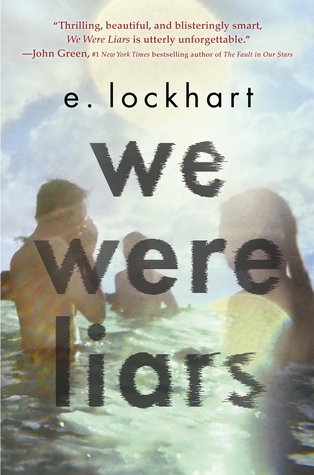
We Were Liars / E. Lockheart


   This post is going to outline the ending of this book in detail, so if that's not your thing then don't read on, I guess. Consider yourself spoiler-warned or whatever. I also listened to it as an audiobook, so I don't have anything interesting to say about the layout of the writing
besides that
I'm glad I didn't
have to
slog through
a whole book
of this.


   This is one of those books that sits on my ebooks holds shelf until I forgot why I put it on hold in the first place, then my turn to have it comes, I download it to my phone, and since it is shorter than all the other audiobook options I currently have checked out, I listen to it. The narrator was good, so I pressed on. I like audiobooks, they make my life easier.

   So: the book. Cadence (Cady) Sinclair suffers migraines but she does not suffer fools, or so she says. We Were Liars follows her, her cousins, and her love interest Gat (not her cousin, this ain't no Victorian lit) through a series of summers spent on her family's private island near Martha's Vineyard.  In a word, the Sinclairs are privileged. It took me a while to decide whether or not I really cared about Cady and her family and her problems, and by the time I arrived at "meh" it was too late to turn back. Basically, Cady has head trauma of mysterious origin (because of AMNESIA) and we spend the book trying to figure out what it is. Blah blah blah there are a lot of over-drawn metaphors and some good bits and it's confusing when she describes emotions as physical trauma but also describes physical trauma as physical trauma with nary a distinction between the two. Are there real wounds involved? Your guess is as good as mine.

   Here's where we talk about the ending.

   Okay, if Lockheart had gotten to the burning the house down bit and stopped there, I would have been on board. Yes, they burned the house down, maybe someone got hurt, they killed the dogs accidentally, thank goodness Cady has remembered. BUT THEN Gat, Mirren, and Johnny were, wait for it, GHOSTS THE WHOLE TIME.


   Once upon a time I arrived at my friends' house and they, for some reason unknown to the three of us, were watching some Nicholas Sparks twaddle; I don't even remember the title, nor will I put the effort into finding it. I asked what movie, they told me, I immediately started laughing, because I had heard (on a podcast maybe?) that this particular film ended with the big reveal of: she was a ghost the whole time. Nothing seemed more ridiculous to me in that moment than a story hinging on any number of characters being ghosts (The Sixth Sense, whatever, I haven't actually seen it) that only a person such as Nicholas Sparks, or I suppose M. Night Shyamalan, would come up with it. We fast-forwarded to the big ghost reveal and then fell on the floor in bouts of laughter.

   Listen, I like unreliable narrators. I like clever twists. I like a good metaphor and a good reveal. I like this book fine except for the ending. What I do not like is a set of ghosts of people who are only dead because of truly remarkable ineptitude when it comes to arson. A word of advice, from someone who hasn't even burned a house down but does possess a modicum of sense: if you are on the main floor of a gas-soaked building and your cousins and boyfriend are on the other floors, wait until they (and you) are OUT OF THE HOUSE BEFORE YOU LIGHT IT. There is gas everywhere, it is a old building, it is full of paper and wood, it will burn NO PROBLEM. You don't have to monitor it! OH MY WORD.

   E. Lockheart, I believe you can be better than Nicholas Sparks. Be better than Nicholas Sparks! Please, do it for the children.

2.04.2015

The Art of Asking / Amanda Palmer


   You've probably seen Amanda Palmer's TED talk, but if not, here it is:


   Now that you have for sure seen Amanda Palmer's TED talk (which could function as the back cover synopsis), we can have a nice wee chat about this here book. It's great! Read it! There are a bunch of swears, and she talks about things like the difference between working as a statue and working as a stripper, etc, so if those bother you then maybe don't read it but otherwise it is an all-around great read and it's lovely and inspiring and heartbreaking and GET THE AUDIOBOOK because it has songs! AUDIOBOOKS WITH SONGS, WHO KNEW.

don't we all
   Basically, Amanda Palmer wants everyone to be more comfortable with being vulnerable and more accepting of help and she talks about working as a living statue, and living with artists, and being in various bands, and living her life on the internet, and her friends, and Neil Gaiman, and being married, and on and on and just says "here is my experience, I've learned things and am learning things and I want to share them with you" and it's just so great. UGH.

   This book came along at a good time for me, as I've been having conversations about this kind of thing (asking for and accepting help, not feeling guilty about being given things you don't really deserve) because I am not super good at it but am working on doing it better. The big thing for me is that I'm 25 (until next week, happy birthday to moi) and I work part time and school full time and I live with my parents. For awhile I was feeling somewhat embarrassed about living with them still when a friend said to me "you know, that's a bit disrespectful. Your parents are giving you a huge gift, and it's a giant blessing, and that's the way you should think and talk about it. Don't let people make you feel guilty or inadequate over having understanding and loving parents" And you know what? She was totally right. My parents are great, and I am so glad I have them, and if they weren't giving me the gift of a home, I wouldn't be able to work at a job I love or further my education. I'd maybe be able to do one of them, but definitely not both and probably not either. So! Thanks, Mom and Dad. I love you both. 

   Amanda Palmer also talks about the difficulty of understanding intent over the internet, and how things can be horribly misinterpreted and suddenly become a huge deal when they were never meant that way. Sometimes things should be a huge deal, and should be exposed and confronted, and sometimes things are interpreted wrong, and it is our job as consumers of information to show some grace and to try to see both sides. Don't stop discerning, but don't jump to conclusions either. Be as shrewd as snakes and as innocent as doves. 

   Some major take-aways from this book: Just ask. It is hard sometimes, and awkward, and might not work out how you want it to but nothing ventured, nothing gained, am I right? Accept help. Even if you think you don't deserve it, even if you worry that people will look down on you. Show grace. Show grace when you accept help, when you give help, when you see something questionable on the internet, when you see someone else in need of help. Examine your paradigm. Why do you think that way? What is it rooted in? What's your first reaction? How could you act differently in this situation? AND LASTLY: make and/or appreciate some dang-diddly art.